

Aggression in Dogs: They Don’t Like it Either
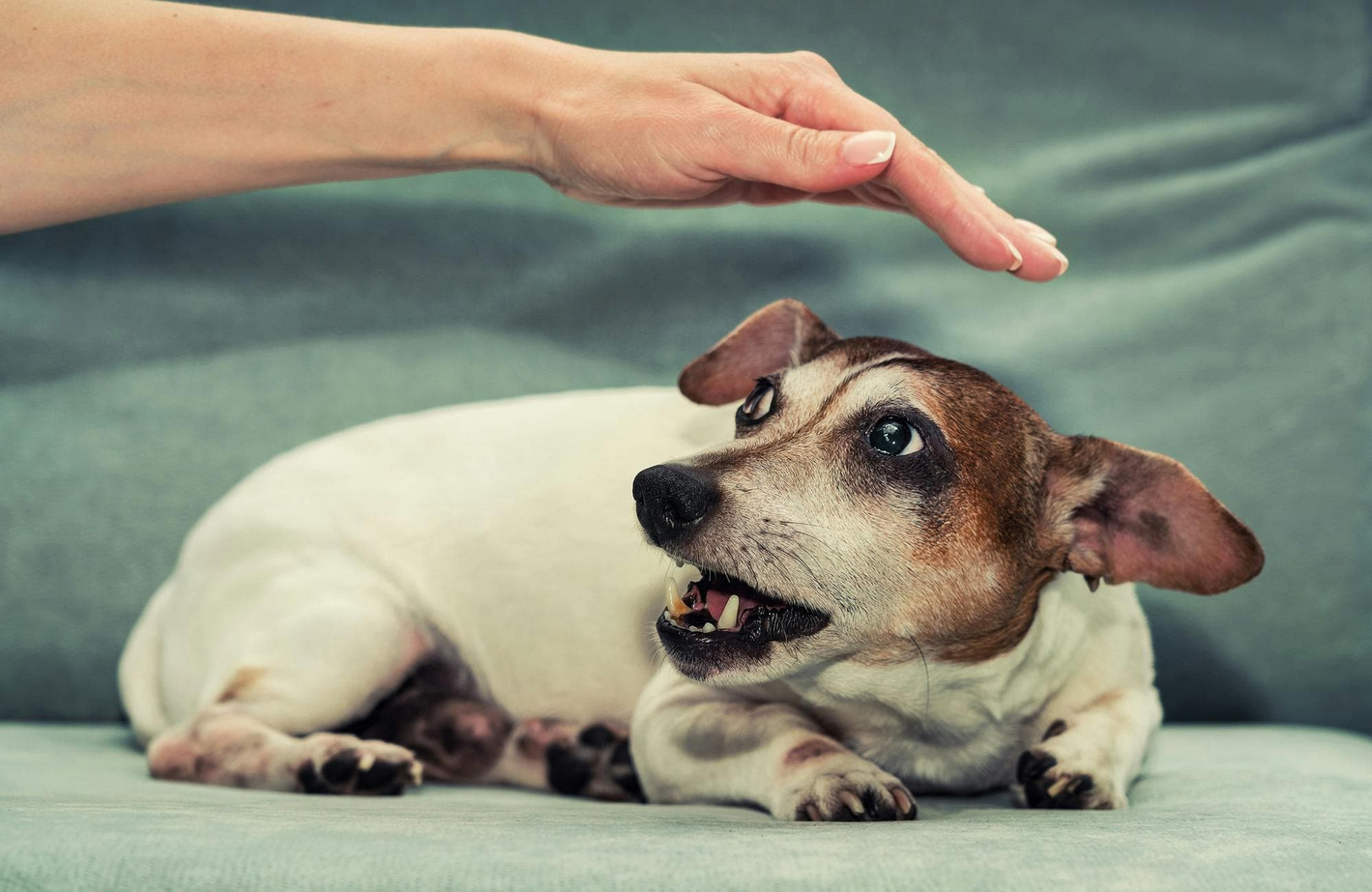
A dog shows aggressive body language including a lowered head, raised ears, hard stare, and bared teeth to communicate discomfort with petting.
What comes to mind when you hear the phrase aggressive dog?
Most people picture the same thing: a threatening dog growling, barking, lunging, or trying to bite. Maybe it’s a dog snapping when someone reaches toward them, or growling over a food bowl. We imagine a dangerous dog we instinctively want to get away from.
And that reaction points to the defining feature of aggression: its purpose is to create distance. It functions to make a perceived threat go away.
Think about the “fight or flight” response. When an animal feels threatened, there are really only two options: move away from the danger, or make the danger move away from you. Both serve the same purpose—survival through distance from the threat.
Most animals prefer flight. Running away is safer. Conflict is risky. Aggression tends to emerge when escape no longer feels possible, effective, or safe.
That’s why behaviors like barking, lunging, growling, snapping, and biting all function similarly. They are attempts to increase distance from something the dog perceives as threatening.
A dog growling over a food bowl is saying: “Stay away from my possessions.”
A dog snapping at an approaching hand is saying: “Do not come closer.”
A dog barking and lunging at a stranger is communicating: “Back away.”
These behaviors are always jarring, but they all reflect the same theme: “I’m uncomfortable with this.”
From an evolutionary perspective, aggression is actually dangerous behavior. In the wild, physical conflict carries major risks: injury, infection, reduced mobility, or inability to acquire food. Fear and avoidance are generally safer survival strategies, which is why most animals default to fleeing when they can.
There are, however, situations where aggression becomes adaptive—particularly self-defense and protecting important resources. If an animal cannot safely move away from a threat, it may try to push the threat away instead.
This perspective matters because it changes how we approach aggressive behavior.
Aggressive dogs can absolutely be dangerous, and those behaviors should be taken seriously. But aggression is often rooted in fear, insecurity, or perceived threat—not a desire to dominate, bully, or behave “badly.”
When we understand that, the training goal becomes clearer.
Instead of focusing only on suppressing the outward behavior, we work to change the dog’s underlying emotional response to the situation. We help the dog feel safer. We create predictable, positive associations with previously threatening triggers. Over time, the dog no longer feels the same need to create distance through aggressive behavior.
Behavior change becomes much more effective when we stop asking:
“How do I stop this dog from reacting?”
And start asking:
“Why does this dog feel unsafe in the first place?”
Need Help With an Aggressive or Reactive Dog?
Aggression and reactivity can feel overwhelming, especially when everyday situations become stressful or unpredictable. The good news is that these behaviors are often highly treatable with the right approach.
If your dog struggles with growling, barking, lunging, snapping, resource guarding, or fear-based behavior, professional guidance can help you better understand what your dog is communicating and create a safer, calmer path forward.
Explore my training services or schedule a consultation to learn more about working with aggressive and reactive dogs.
