

Leash Reactivity Training in Metro Detroit
If your dog barks, lunges, or becomes difficult to control the moment they see another dog or person on a walk, you’re dealing with leash reactivity.
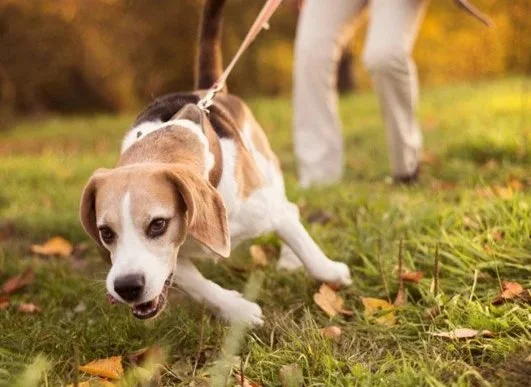
This is one of the most common and frustrating behavior issues for dog owners. Walks feel unpredictable. You start scanning the environment, avoiding certain routes, or going out at odd hours just to prevent an incident.
In many Metro Detroit neighborhoods, where sidewalks are narrow and encounters are unavoidable, reactivity can feel especially difficult to manage.
I’ve dealt with this myself with Jemma, my 90 lb German Shepherd, and I understand how quickly it can take over your routine.
The good news is that leash reactivity is highly treatable with the right approach.
Why Dogs Become Reactive on Leash
Leash reactivity doesn’t have a single cause. In many cases, it starts as something relatively minor and builds over time through repetition.
Some dogs are trying to reach another dog to play. Others feel uncomfortable or threatened but are unable to create distance because of the leash. In some cases, the behavior may come from true aggression. Regardless of the starting point, the pattern that develops is consistent: the dog experiences a strong emotional response, the leash prevents them from acting on it, and frustration builds.
Over time, that frustration becomes associated with the trigger itself. The dog begins reacting more quickly, more intensely, and at greater distances.
A Proven Approach to Leash Reactivity Training
At Karuna Canine, leash reactivity training focuses on changing both behavior and underlying emotional response. The goal isn’t just to suppress reactions, but to create a dog that can notice triggers and remain responsive to their handler.
Training typically begins by establishing clean, consistent leash handling and reinforcing a strong position near the handler. Dogs learn that staying close and engaged is what allows movement and access to rewards. This alone starts to reduce the impulse to hit the end of the leash.
From there, we build reliable engagement skills that allow the dog to disengage from triggers and return focus to the handler. This creates a repeatable pattern: the dog notices a trigger, then chooses to orient back to you.
With enough consistent reinforcement, two important changes occur:
The behavior of checking in with the handler becomes automatic
The dog’s emotional response to triggers begins to shift
The end result is not just fewer outbursts, but a dog that is calmer, more predictable, and easier to handle in real-world situations.
Real-World Practice That Actually Works
Progress with leash reactivity comes from controlled, intentional exposure. That means working at distances where the dog can stay successful, then gradually increasing difficulty as skills improve.
This can be done in structured setups with neutral helper dogs, as well as through carefully managed real-world encounters. Knowing how to control distance, timing, and reinforcement is what makes the difference between steady progress and months of frustration.
Many owners try to work through reactivity on their own, but often end up stuck in a cycle of trial and error. With the right guidance, the process becomes far more efficient and far less stressful for both you and your dog.
Leash Reactivity Training in Detroit
If your dog is barking, lunging, or difficult to control on walks, you’re not alone, and you don’t have to keep managing around the problem.
At Karuna Canine, I offer private, in-home leash reactivity training in Detroit and the surrounding areas, with a focus on practical results you can rely on in everyday life.
If you’re ready for calmer, more predictable walks, reach out to get started.